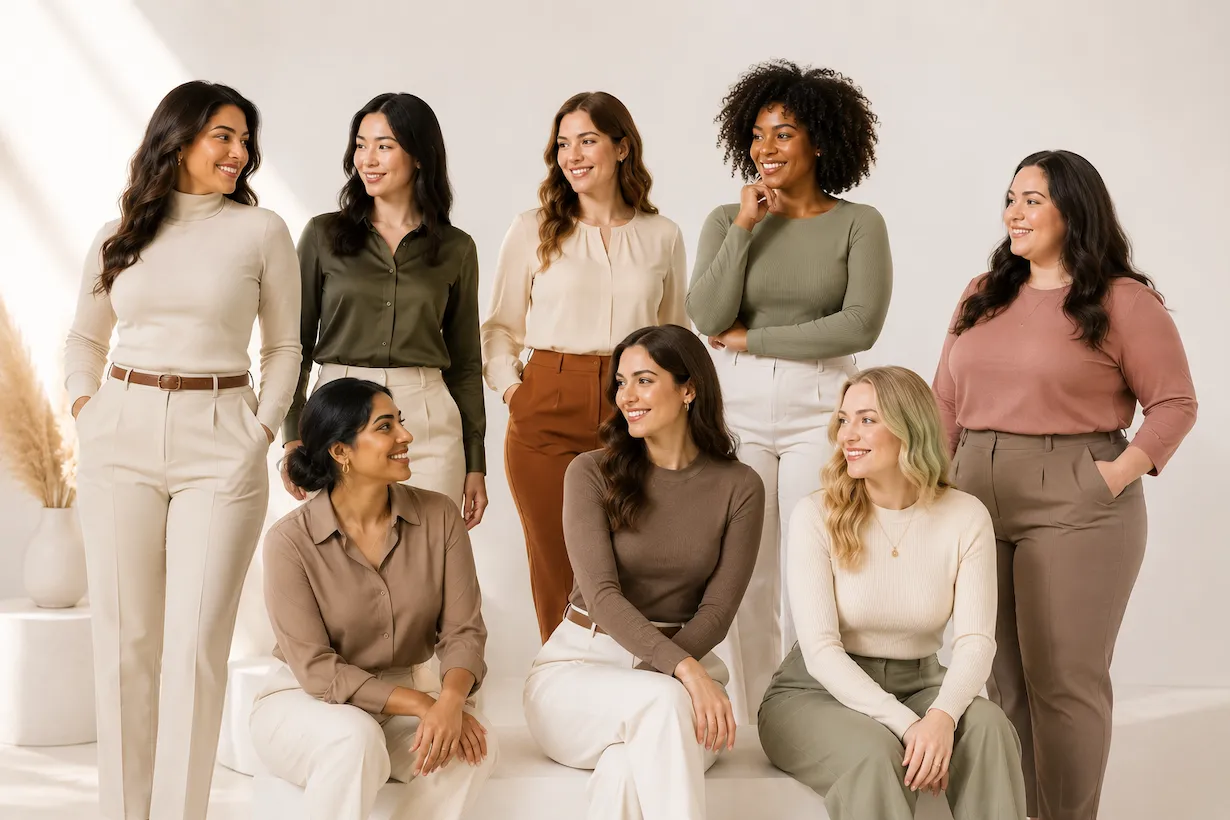
This is different from the Female Body Shape Calculator Guide — that explains how to use the calculator and get your result. This one explains what your result means and how to dress for it, in detail, for all 8 shapes.
If you have not calculated your shape yet, the Female Body Shape Calculator takes four measurements and gives your result in under 30 seconds.
Find your body type first — then come back to this guide for your specific styling tips.
Quick Reference
All 8 Female Body Types at a Glance
Before going shape by shape, here is a quick comparison so you can see where yours sits relative to the others.
| Body Type | Key Feature | Most Common Mistake |
|---|---|---|
| Hourglass | Bust and hips equal, waist clearly narrower | Wearing boxy cuts that hide the waist |
| Top Hourglass | Hourglass + bust slightly larger | Adding volume to chest area |
| Bottom Hourglass | Hourglass + hips slightly larger | Tight fabrics that cling around hips |
| Pear | Hips noticeably wider than bust | Drawing attention downward with bright bottoms |
| Spoon | Pear + visible hip shelf | Tight waistbands that dig into hip shelf |
| Inverted Triangle | Shoulders and bust wider than hips | Shoulder padding, boat necks |
| Apple | Waist is widest point | Tight waistbands, horizontal stripes |
| Rectangle | Bust, waist, hips similar width | Shapeless silhouettes with no definition |
First 4 Body Types
Hourglass, Top Hourglass, Bottom Hourglass and Pear — Explained
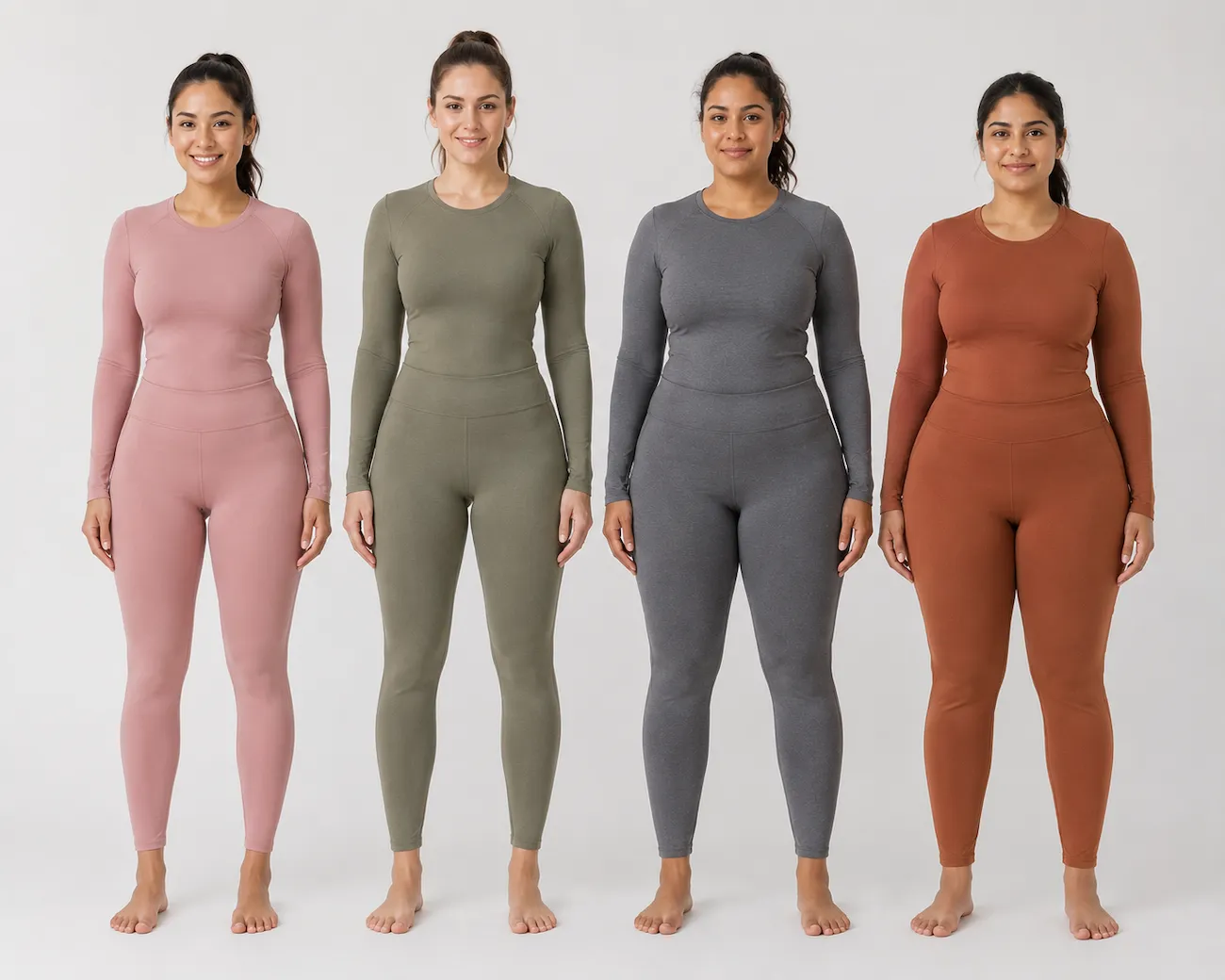
Hourglass
Your bust and hips measure within 5% of each other, and your waist is at least 18% narrower than both. The silhouette is symmetrical top and bottom with a clearly defined middle.
This is the shape most fashion was originally designed around — which means standard sizing tends to fit you better than it does most other shapes. The challenge is not finding clothes that fit. It is avoiding cuts that erase the waist definition you already have.
What Works
- Wrap dresses and wrap tops
- Belted coats and jackets
- Fit-and-flare silhouettes
- High-waist straight trousers
- Bodycon cuts in structured fabric
What to Avoid
- Boxy, oversized tops
- Drop-waist dresses
- Shapeless shift dresses
- Elastic waistbands that bunch
Top Hourglass
Same balanced curve as the hourglass with a defined waist, but your bust is slightly larger than your hips — typically by 1 to 2 inches. The upper body is the fuller half.
Standard hourglass advice mostly applies here. The difference is that you want to avoid anything that adds further volume to the chest or shoulders, since that extra fullness already exists.
What Works
- V-necks and scoop necks
- A-line and midi skirts
- Structured jackets that taper at waist
- High-waist wide-leg trousers
- Wrap styles that define the waist
What to Avoid
- Boat necks and square necklines
- Heavy embellishment on chest
- Ruffles or puff sleeves on top
- Cropped jackets that end at bust
Bottom Hourglass
Balanced curves with a defined waist, but your hips are slightly larger than your bust — typically by 1 to 2 inches. The lower body is the fuller half.
The goal is adding subtle visual balance above the waist without making the top look too structured or boxy. Peplum tops do exactly this — they flare at the hip line to create optical symmetry.
What Works
- Peplum tops and blouses
- Fit-and-flare dresses
- Structured blazers with shoulder detail
- High-rise straight jeans
- Off-shoulder tops to widen visually
What to Avoid
- Clingy fabrics around the hip
- Pencil skirts without stretch
- Low-rise jeans that emphasise hips
- Tight across-the-hip prints
Pear (Triangle)
Your hips are more than 5% wider than your bust, with a reasonably defined waist. This is the most common female body type globally. Weight distributes more heavily in the lower half — hips, thighs, and seat.
The styling principle is visual balance — drawing attention upward to even out the proportions. Bright, structured, or detailed pieces on top. Simple, darker pieces below.
What Works
- Structured blazers and jackets
- Statement tops, bold necklines
- A-line skirts that skim the hip
- Dark straight-leg trousers
- Horizontal stripes above waist only
What to Avoid
- Hip-pocket detail on trousers
- Pleated trousers that add bulk
- Tight pencil skirts
- Low-cut tops that pull eye downward
Last 4 Body Types
Spoon, Inverted Triangle, Apple and Rectangle — Explained
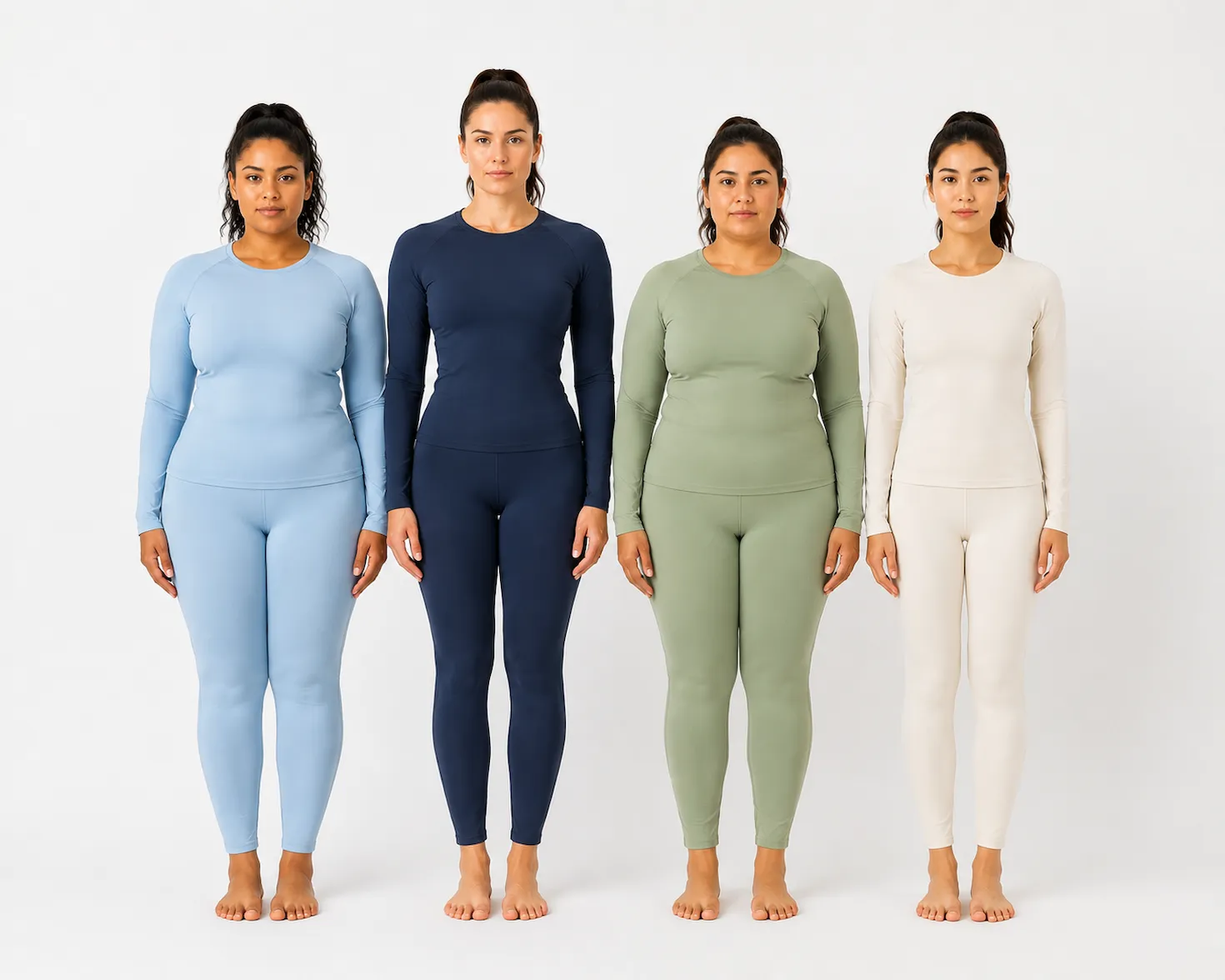
Spoon
A variant of the Pear shape, but with a visible hip shelf — the high hip measurement is noticeably larger than the bust, creating a shelf-like silhouette at the hip bone level. Most 3-measurement calculators classify Spoon shapes as standard Pear, which is why the PRO Free Tools calculator uses four measurements.
The hip shelf responds better to soft, draped fabrics than to structured cuts. Anything that cinches directly at the hip shelf tends to emphasise it rather than smooth over it.
What Works
- Soft draping and wrap styles
- Mid-rise bottoms — not high rise
- Flared and A-line skirts
- Flowy wide-leg trousers
- Structured tops to balance
What to Avoid
- High-rise waistbands over hip shelf
- Straight-cut trousers with no flare
- Pockets directly on hip shelf
- Clingy jersey fabrics below waist
Inverted Triangle
Your shoulders and bust are more than 5% wider than your hips. Common in athletic builds and women who carry weight in the upper body. The silhouette is V-shaped — wider at the top, narrower at the bottom.
The goal is adding visual volume below the waist while keeping the top simple. Wide-leg trousers do more for this shape than almost any other single piece.
What Works
- Wide-leg and palazzo trousers
- Bootcut and flared jeans
- Full and A-line skirts
- V-necks that draw eye inward
- Simple fitted tops, no embellishment
What to Avoid
- Shoulder padding of any kind
- Boat necks and square necklines
- Horizontal stripes across the chest
- Skinny trousers that emphasise narrow hips
Apple (Round)
Your waist is the widest part of your torso — equal to or wider than both bust and hips. Weight distributes primarily around the midsection. Legs are typically slim relative to the upper body.
Vertical lines are the main tool here. Anything that draws the eye up and down rather than across — V-necks, vertical prints, open-front cardigans — creates length and reduces visual width at the centre.
What Works
- Empire waistlines (sits below bust)
- Deep V-necks and open necklines
- Vertical stripe patterns
- Wrap styles in soft fabric
- Straight-leg and wide-leg trousers
What to Avoid
- Tight waistbands that dig in
- Horizontal stripes anywhere on torso
- Cropped tops that end at widest point
- Stiff fabrics with no give
Rectangle (Straight)
Your bust, waist, and hips measure within about 5% of each other. The silhouette is straight and columnar with very little natural curve variation. Often a lean or athletic build.
The goal is introducing visual contrast between the bust, waist, and hip — creating the impression of definition where the measurements do not naturally provide it. Belts, peplum, and layering all do this well.
What Works
- Wide belts at natural waist
- Peplum tops and jackets
- Ruffles and tiered skirts
- Layered outfits with texture contrast
- Cropped tops with high-waist bottoms
What to Avoid
- Shapeless shift dresses
- Plain monochromatic head-to-toe looks
- Oversized everything with no definition
- Slippery fabrics with no structure
Styling Guide
How to Dress for Your Body Type — Practical Tips
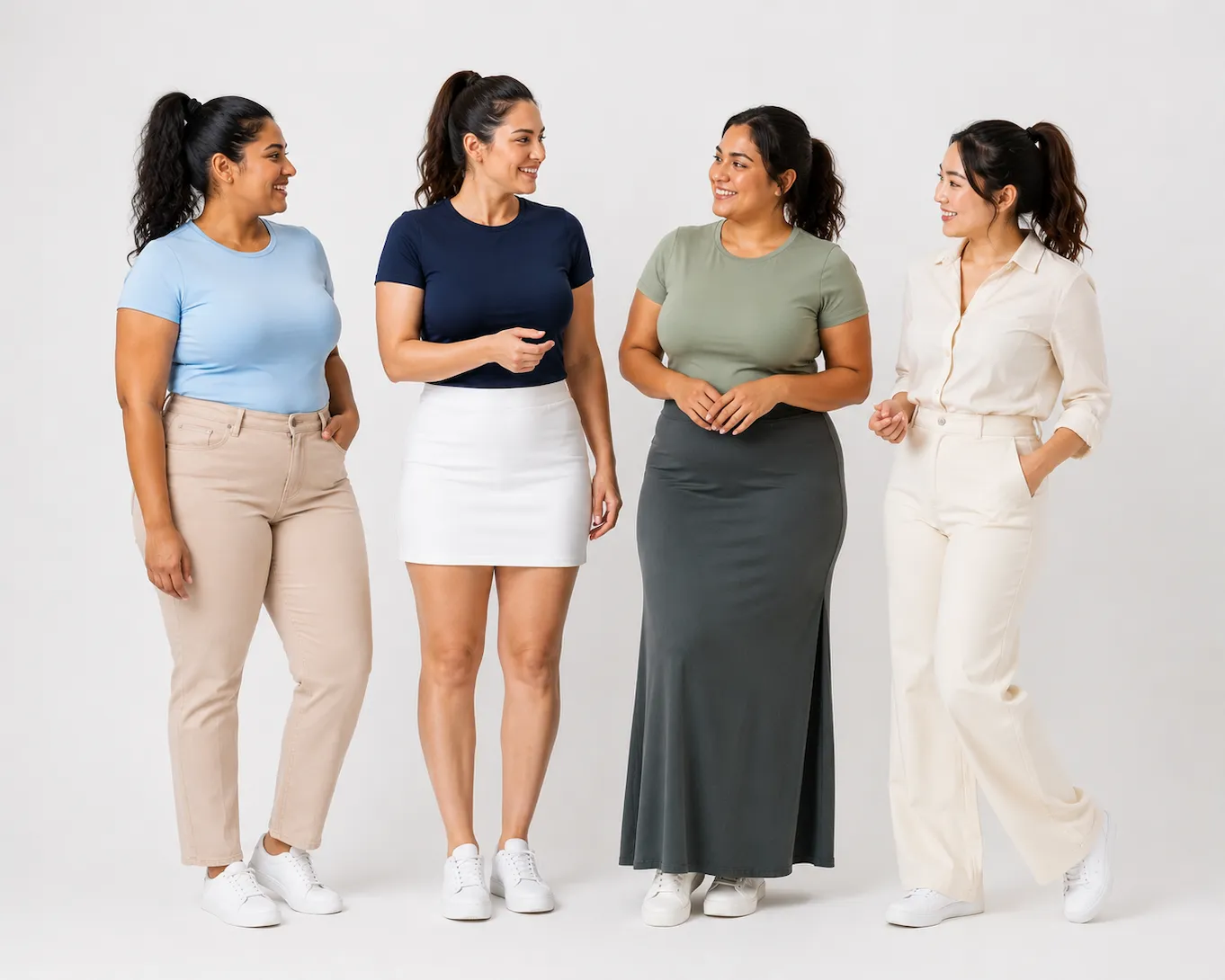
These principles apply across all 8 body types. They are not rules — they are patterns that work consistently based on proportion and visual balance.
Fit matters more than size. A size 12 that fits your actual proportions looks better than a size 10 that gaps, pulls, or bunches. For shapes like Pear and Spoon where the top and bottom half are significantly different sizes, buying separates — and sizing each half independently — is almost always the better approach.
Fabric choice is half the battle. Soft, draped fabrics like jersey, silk, and modal follow body shape naturally. Stiff fabrics like denim and structured cotton create their own silhouette. Knowing which you need for a given shape saves a lot of trial and error.
The waist is the anchor. For most body types, defining the waist — even slightly — improves proportion. A simple belt, a tucked-in top, or a fitted waistband all do the same job.
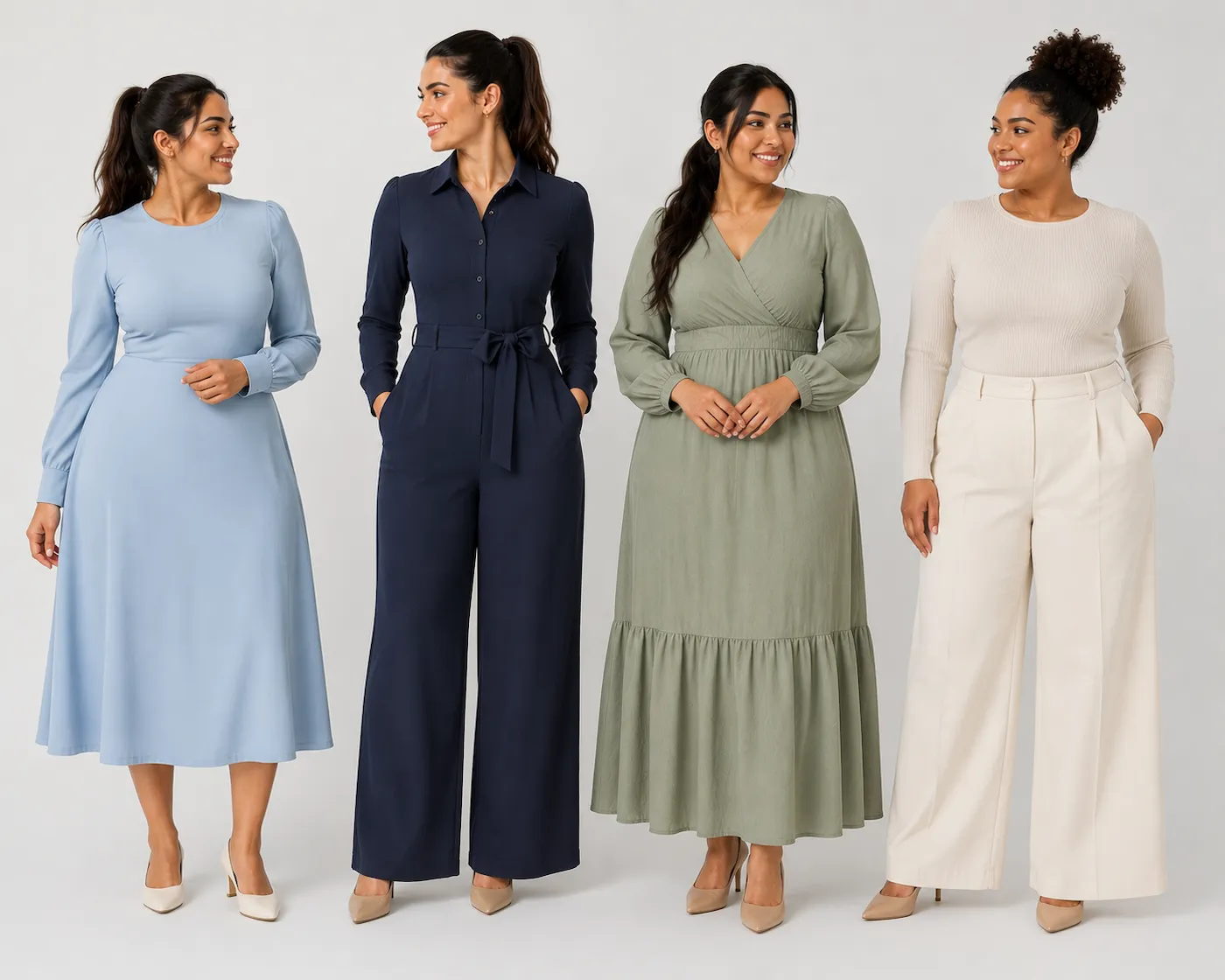
Vertical lines elongate. Horizontal lines widen. This applies everywhere — stripes, seams, zips, patterns. For Apple and Rectangle shapes, vertical elements add length. For Pear and Inverted Triangle, horizontal detail above or below the waist adds the visual weight you want in that area.
Dark colours recede, light colours advance. This is why dark trousers work so consistently for Pear shapes — they push the lower half back visually. Lighter, brighter pieces on whichever half you want to draw attention toward.
Good to Know
Does Body Type Change Over Time?
Yes — and more significantly than most women expect. Pregnancy redistributes where the body carries weight, often shifting a Rectangle or Inverted Triangle shape toward Hourglass or Pear. Hormonal changes through perimenopause and menopause frequently shift weight toward the midsection, moving Pear or Hourglass shapes toward Apple. Significant weight gain or loss changes ratios across all measurements.
Body type is not a permanent classification. Recalculating with the Body Shape Calculator after any major change gives you an updated reference point.
Body Type vs Body Shape — Is There a Difference?
The terms are used interchangeably and mean the same thing in the context of styling. Both refer to the proportional relationship between your bust, waist, and hip measurements. Some fitness contexts use “body type” to refer to ectomorph, mesomorph, and endomorph classifications — those are about metabolism and muscle distribution, not about the same proportions this calculator measures.
Not sure which of the 8 types you are? The calculator takes four measurements and tells you in under 30 seconds.
More Free Tools
Related Tools
FAQ
Frequently Asked Questions
What is the most common female body type?
The Pear shape — hips wider than bust with a defined waist — is the most common female body type globally. Rectangle is the second most common, followed by Apple. Hourglass is actually less common than most styling content implies.
How is the Spoon body type different from Pear?
Both have hips wider than bust, but the Spoon shape has a visible shelf at the high hip — the area 3 to 4 inches below the waist. This shelf affects which waistband heights and trouser cuts fit correctly. Three-measurement calculators cannot detect this distinction, which is why the PRO Free Tools calculator uses a fourth measurement — the high hip.
Can I have characteristics of more than one body type?
Yes. Most women sit close to the boundary between two shapes. Your calculator result gives your primary classification — the shape your measurements most closely match. If you are borderline, the styling guidance for both shapes is worth reading.
Do styling rules apply at all sizes?
Yes. Body type styling is based on proportional ratios — the relationship between your measurements — not the measurements themselves. A size 6 and a size 18 woman with the same proportions have the same body type and the same styling principles apply to both.
What is the difference between body type and BMI?
BMI measures weight relative to height. Body type measures how that weight is distributed across bust, waist, and hip. Two women with identical BMI can have completely different body types — and completely different styling needs. For clothing decisions, body type is the more useful measurement.
How often should I check my body type?
Any time your measurements change noticeably — after pregnancy, significant weight change, or if clothes are suddenly fitting differently across the board. Body type is not fixed for life. Recalculating periodically gives you an updated reference for what currently works on your body.
PRO FreeTools
Body & Wellness
Published by PRO Free Tools — free browser-based calculators and AI tools. No signup, no data storage, 100% private.